getting gladius warhammer 40k to work on my laptop
Title: W40k - Gladius - Starting information UI
Channel: AirsickHydra
W40k - Gladius - Starting information UI by AirsickHydra
Gladius: Warhammer 40,000 – Laptop Conquest: My Success Story!
Crushing Worlds: My Triumph in Gladius – Warhammer 40,000 on a Laptop!
The hum of the fans, a familiar symphony, filled my ears. It's the constant companion of any laptop gamer, much like the nagging need for "just one more turn." I’m talking about Gladius: Relics of War, of course. More specifically, Gladius running on my trusty, if slightly aging, laptop. This isn't just any playthrough; it's a story of tactical mastery. It’s a tale of victory against the odds. Thus, this is my Gladius: Warhammer 40,000 laptop conquest success story!
From Screen to Victory: The Early Game Grind
Initially, the experience was daunting. The vastness of the 40k universe, rendered in pixelated glory. The many factions, each with their unique units and playstyles, threatened to overwhelm. However, the initial learning curve was steep. I had to grasp resource management carefully. Furthermore, mastering unit compositions was paramount. Moreover, I quickly realized the importance of scouting. Early game dominance hinges on finding those juicy resource deposits. Also, early skirmishes set the stage for late-game domination. Therefore, building a powerful economy became my primary focus. Before long, I was ready to expand aggressively. So, I learned to balance growth with defense. It’s a delicate dance, really.
Adapting the Strategy: Mastering Factional Differences
I experimented with different factions. The brutal Orks, the technologically advanced Adeptus Mechanicus, the relentless Space Marines, and finally, the Necrons. Each offered a unique challenge, a puzzle to decipher. I discovered that playing each faction demanded a different strategy. For instance, with the Orks, it was all about overwhelming numbers and brute force. The Adeptus Mechanicus required careful planning and strategic unit placement. In Necrons, you have an enduring presence with potent units. Consequently, mastering the nuances of these factions was crucial. In fact, that helped me adapt my strategies. Also, it made each game fresh and exciting.
The Laptop's Labyrinth: Performance Optimization
Let’s not forget the elephant in the room: the laptop! I had to face certain hardware limitations. Therefore, I had to make some sacrifices. I tweaked the graphics settings to achieve acceptable frame rates. Thankfully, Gladius is remarkably well-optimized. Still, I kept a close eye on those temperatures. This also meant minimizing background applications. Similarly, frequent reboots became part of the routine. Despite these challenges, I found ways to play. That's to say; I prioritized strategic patience over visual splendor. My laptop, though not a powerhouse, proved more than capable.
Tactical Triumph: Winning the War
The turning point came in a particularly intense game against the Aeldari. Their mobility and psychic powers gave me fits. I focused on building a strong, varied army. I employed flanking maneuvers. Moreover, I learned to anticipate enemy attacks. In addition, I mastered the art of counter-building. I adapted. I persevered. Thus, I started to gain the upper hand. Ultimately, the tide turned. I secured a decisive victory. It was a moment of pure triumph. The years of gaming and hard work had paid off.
The Human Element: Lessons Learned & Enjoyed
Beyond the pixels and the explosions, Gladius taught me valuable lessons. Patience, resilience, and adaptability became crucial. I learned to analyze situations. I also learned to make informed decisions under pressure. Each loss was a learning opportunity. Furthermore, with each victory, my confidence grew. However, the most important thing was the enjoyment. Losing a game, as frustrating as it was, never dampened my enthusiasm. The thrill of the strategy, the satisfaction of victory, kept me coming back. In fact, that's the true essence of gaming.
My Advice: Conquer with Confidence!
If you're considering playing Gladius: Relics of War on a laptop, don't hesitate. Embrace the challenge. Be smart with settings. Remember, victory is achievable with the right strategy. Learn from your mistakes. Enjoy the journey. Therefore, pick a faction and delve into the 40k universe. I've proven it's doable, and more importantly, it's fun. Now go forth and crush those worlds!
JQuery Nightmare: Works on Laptop, NOT Phone?! (Solved!)Gladius: Warhammer 40,000 – Laptop Conquest: My Success Story!
Alright, strap yourselves in, commanders! Today, we're not just talking about the grim darkness of the far future; we're talking about conquering it, one turn at a time, straight from the cozy confines of… well, my laptop! That's right, this is my Gladius: Warhammer 40,000 – Laptop Conquest: My Success Story, and I figured it was high time I shared the glorious and often brutal triumphs I’ve experienced. From being a complete noob to (dare I say it?) a seasoned strategist, it's been a wild ride. Trust me, if I can do it, anyone can!
1. The Initial Spark: Why Gladius, Why Laptop?
Let’s be honest; I’m a creature of comfort. The thought of lugging around a massive desktop and monitor setup just to play a game wasn’t exactly appealing. That’s where the laptop comes in. This was my gateway. Now, when I first stumbled upon Gladius – and let's be honest, it was probably through a YouTube recommendation – I was instantly hooked. The 40K universe has always resonated with me, the epic scale, the gritty detail, the sheer weight of history. And Gladius? Well, it’s a perfect distillation of that, wrapped in a turn-based 4X strategy game. It's like a tabletop battle without the hassle of painting miniatures (though, I confess, I do have a few on my desk for inspiration!).
2. Choosing My Faction: The First, and Often Toughest, Decision
The beauty, and the slight terror, of Gladius is the faction choice. Space Marines? Eldar? Necrons? Orks? Each one offers a completely unique playstyle, with strengths, weaknesses, and units that feel truly distinct. For me, it started with the Astartes – the Space Marines. Their resilience, their powerful units, and their iconic presence in the 40K universe made them the logical starting point. They felt… safe. And they were a good choice, but the allure of trying out other factions constantly tugged at me. Imagine the chaos of the Orks, the mysterious power of the Eldar, the relentless march of the Necrons! It was like being given a universe of possibilities.
3. Early Struggles: The Grim Reality of Planetary Conquest
My first few games were… rough. Brutal, even. I was smashed, pulverized, and generally outmaneuvered by the AI. I remember one particularly humiliating encounter where a horde of Tyranids completely overwhelmed my defenses. It was a lesson in the harsh realities of planetary conquest. I learned quickly that raw power isn't enough; you need a plan. You need to understand your resources, your terrain, and your opponent. It’s like learning to walk before you can run – or in this case, stand before you can order a Titan Legio!
4. Learning the Ropes: Resource Management 101
One of the biggest hurdles for me was resource management. In Gladius, you’re juggling food, minerals, power, and influence. Ignoring any of these resources is a recipe for disaster. I quickly learned that starving my population was a bad idea (they tend to, you know, die) and underpowering my cities meant slower production. Minerals were critical for building units, power was needed to run the infrastructure, and influence lets you do diplomacy…or, more accurately, declare war! It was like learning to balance a dozen plates at once.
5. Building My First True Base: City Planning for Survival
This is where the game becomes truly addictive. The thrill of expanding, building up your cities, and creating a strong, fortified base is second to none. I started to prioritize building placement, ensuring I had access to key resources and defensive positions. I learned the value of walls, the importance of artillery, and the necessity of a strong air force (that's a whole other level of tactical enjoyment). It was like designing your own little slice of the 40K universe.
6. Tactical Triumph: Mastering Combat Encounters
The combat in Gladius is deceptively simple, yet allows for a lot of depth. Understanding unit abilities, positioning, and terrain is absolutely crucial. I started to study the strengths and weaknesses of my units, learning how to best utilize them in different scenarios. Over time, I began to anticipate my opponent’s moves, setting traps, ambushes, and utilizing clever tactics. It felt like a victory every time I outsmarted the computer!
7. Adapting to the Enemy: Understanding the AI Opponents
The AI in Gladius can be ruthless; it doesn't always play fair, mind you. Each faction has its own unique strategies and tendencies. I started to study these patterns, learning what to expect from each opponent. Did they favor a horde rush? Did they prioritize technological advancement? Understanding these nuances allowed me to tailor my own strategy, adapting to the changing circumstances of each game.
8. Unit Composition: Building the Perfect Army
This is where the fun really starts. Experimenting with different unit compositions, finding the perfect balance of firepower, mobility, and resilience, is a key ingredient to success. I had a blast figuring out which units worked best together; and it was all the more fun trying out new strategies. I might throw in a few devastator squads for long-range support, a dreadnought or two to draw fire, and a few tactical squads to hold the line. The possibilities are endless!
9. Technological Advancement: The Tech Tree Tango
The tech tree is a crucial element of Gladius. It's like a branching path of new weapons, units, and abilities. Choosing the right technologies, and progressing at the right pace, is vital for success. I learned to focus on research that would give me an edge in combat while also supporting my economic and defensive capabilities. It's a careful tango between short-term gains and long-term strategic planning.
10. Diplomacy and Espionage: Navigating the Political Landscape
Gladius isn't just about combat; it’s also about diplomacy and espionage. Building alliances, making deals, and trying to manipulate your rivals is a key part. You can also use spies to sabotage your enemies, steal tech, and sow discord. Though frankly, I often preferred the direct approach: war! But the game provides options for all playstyles.
11. The Learning Curve: From Novice to… Well, Competent
There's definitely a learning curve in Gladius. It's like learning a new language, but instead of grammar, it's unit stats, and instead of vocabulary, it's building types. But don't worry, with each round, you’ll get better. Remember those early losses? They were all valuable lessons, fuel for the fire of future victories.
12. The Laptop Factor: Gladius and Portable Conquest
This is where the laptop really shines. The ability to play Gladius anywhere, at any time, is a massive plus. Sitting on the couch? Check. On a train? Check. Waiting for a doctor's appointment? Double-check! The portability of my laptop has allowed me to squeeze countless hours of gameplay into my schedule. It is a godsend.
13. My Go-To Strategy: The Art of the Adaptive Plan
I'm not gonna lie, I don't have a single, foolproof strategy. The beauty of Gladius is that you have to adapt. Every game presents a different set of challenges. The terrain, the opponents, the available resources – they all shape the best approach. I've discovered that the most important thing is to be flexible, to be willing to change my plans, and to think on my feet.
14. The Sweet Taste of Victory: Conquering the Planet (and My Way)
Reaching the end game, and seeing your faction's banner flying over a conquered planet? That's pure satisfaction! It's the culmination of hours of planning, strategic planning, and tactical execution. It's like a miniature victory in the grim darkness of the far future. And the best part? You get to start all over again, and crush your opponents once more.
15. Beyond the Surface: The Enduring Appeal of Gladius
Gladius isn't just a game; it's a time sink, a challenge, a puzzle and a fantastic addition to the 40K universe. It’s a game that rewards strategic thinking, tactical planning, and a willingness to adapt. It’s a game that will have you thinking about it long after you put your laptop away. It's a game I wholeheartedly recommend to anyone who loves strategy games, or the Warhammer 40,000 universe or just enjoys a good time. The laptop is simply the perfect battleground.
Conclusion: My Gladius Journey – Still Going Strong!
So, there you have it – my Gladius: Warhammer 40,000 – Laptop Conquest: My Success Story, the high points, the low points, and the many, many hours logged in the virtual battlefields of Gladius. It’s been an incredible journey, a constant stream of learning, adapting, and, yes, occasionally, losing gloriously. But the magic of Gladius keeps me coming back for more. It's a game that offers something for everyone; it's a deep and rewarding experience, and an absolute blast to play. And the fact that I can do it all
HDMI Disaster! Fix Your Laptop-to-TV Connection NOW!How to Warhammer Gladius Relices of War Cashing at Startup, Won't launch or lags with FPS drop

By Get Droid Tips How to Warhammer Gladius Relices of War Cashing at Startup, Won't launch or lags with FPS drop by Get Droid Tips
W40k - Gladius Guides - Base Location

By AirsickHydra W40k - Gladius Guides - Base Location by AirsickHydra
Getting into Warhammer 40K

By Senpapi Gabe Getting into Warhammer 40K by Senpapi Gabe
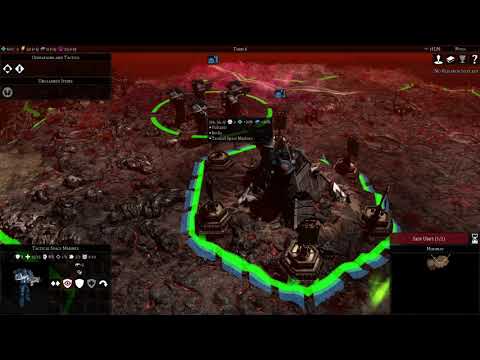
Title: Warhammer 40,000 Gladius Specialist Pack Gameplay PC Game
Channel: AllGamesWorldHd
Warhammer 40,000 Gladius Specialist Pack Gameplay PC Game by AllGamesWorldHd
Laptop Working
Gladius: Warhammer 40,000 – Laptop Conquest: My Success Story!
The hum of the fan, a familiar lullaby accompanying the rhythmic clicking of the mouse. It was a sound I grew to cherish, forging a bond with my laptop that transcended mere functionality. This wasn't just about playing a game; it was about conquering a battlefield from the confines of my portable command center, a realm rendered unto the cold, calculating logic of Warhammer 40,000: Gladius – Relics of War. My journey wasn't paved with the shiny allure of a desktop behemoth; it was etched in the quiet resilience of a laptop, a testament to the surprisingly robust capabilities of this mobile platform. This is my story, my successful expedition into the grim darkness of the far future, waged entirely from the thermal constraints of my laptop.
Challenging the Tech Gods: Why Laptop Gladius?
Let's be frank: the conventional wisdom leans heavily towards desktop dominance when it comes to strategy games. The promise of superior graphics, larger screens, and cooler operating temperatures is potent. However, the practical realities of life often dictate different priorities. For me, the portability of a laptop was paramount. The ability to play Gladius anywhere, anytime, on a train, a plane, or even just from the comfort of my couch, was a significant draw. The initial skepticism, fueled by whispers of frame rate drops and overheating, soon gave way to a determined resolve: I would master Gladius on this machine, or I would perish trying.
The first hurdle was, naturally, the hardware. My laptop, while far from the top-of-the-line models, possessed a respectable Core i7 processor, complemented by a discrete graphics card and a decent amount of RAM. The initial system requirements listed by the developers seemed within reach. However, the true test lay in the details, the nuanced optimizations required to ensure a smooth and enjoyable gaming experience. This involved a deep dive into the game’s settings, a meticulous calibration process to find the sweet spot between visual fidelity and performance.
Optimizing for Victory: The Settings Crucible
The default settings often prove to be a trap. They are designed for a broad audience, catering to a spectrum of hardware configurations. For the laptop gamer, these defaults must be carefully scrutinized and, in most cases, radically altered. My optimization strategy hinged on several key areas:
- Graphics Presets: I started by experimenting with the graphical presets. Initially, I settled on the "Medium" setting, which provided a good balance between visual quality and performance. However, I soon realized that even within the "Medium" preset, significant improvements could be made.
- Resolution: Lowering the resolution yielded immediate dividends. While the allure of a native 1920x1080 display was strong, I found that dropping to 1600x900, or even 1366x768, dramatically reduced the strain on the graphics card, without a significant loss of visual clarity on my display.
- Anti-Aliasing: The game's implementation of anti-aliasing was particularly resource-intensive. Disabling it, or reducing it to minimal settings, was a non-negotiable decision. The minor visual imperfections were a small price to pay for a smoother frame rate.
- Shadows and Reflections: These graphical effects had a significant impact on performance. I opted to turn down, or completely disable, shadows and reflections. The difference in visual impact was surprisingly minimal, while the boost to frame rate was noticeable.
- Texture Quality: The texture quality can significantly affect the visual appeal of the game. Playing with Medium settings provided adequate visuals while maintaining reasonable performance. High settings would reduce the frame rates, thereby making the game difficult to play.
- Particle Effects: Gladius is a game of explosions and intense combat, leading to a lot of particle effects over time. Keeping particle effects moderate allowed for an acceptable gaming experience.
The process was iterative. Each game, each battle, was a data point. Over time, I developed a keen understanding of the settings that would allow me to experience the game's intricate strategy without sacrificing my game performance.
Harnessing the Power Within: Beyond the Settings Menu
Optimization isn't limited to the in-game settings. There are a number of external factors that can be tweaked to squeeze every last ounce of performance from your laptop.
- Driver Updates: Keeping the graphics card drivers up to date is crucial. New driver releases often include performance improvements and bug fixes. I made it a habit to check for updates regularly.
- Background Processes: Close unnecessary applications and background processes. Every application running in the background consumes system resources. Closing unnecessary applications helps free up processing power.
- Thermals Management: Laptop heat management is often limited. I ensured that all the vents were free of debris. I also used a laptop cooling pad, which significantly improves the airflow.
- Overclocking (Use with Caution): Some laptops allow for a degree of overclocking. However, this comes with increased risk and must be approached with caution. Researching your laptop's capabilities and limitations before attempting to overclock is a must.
The Triumph of Strategy: Adapting to the Laptop's Limitations
The laptop experience instilled in me a level of strategic frugality that I would not have developed on a more powerful machine. It forced me to develop a deeper appreciation for resource management, unit positioning, and decisive tactical maneuvers.
- Early Game Expansion: With limited processing power, I realized that rapid expansion was not always the best strategy. Instead, I focused on securing key strategic locations. Resource-rich locations became my primary focus.
- Unit Compositions: I adjusted my unit compositions to prioritize effectiveness over raw numbers. Instead of fielding armies of expendable units, I focused on elite squads. Tactical awareness became critical to my gameplay.
- Observing the Battlefield: The focus on the laptop screen forced me to carefully study the battlefield. Every movement, every engagement, felt like a lesson. I learned to anticipate enemy movements, identify vulnerabilities, and exploit them swiftly.
Conquering the Grimdark: My Battles, My Victories
The victories, hard-earned and meticulously planned, were all the more satisfying because of the challenges I'd overcome.
- The Necron Onslaught: Facing the Necron threat required a particularly cunning strategy. The Necrons' resilience and overwhelming late-game power presented numerous challenges. I found that aggressive early-game expansion and a focus on specialized anti-Necron units were critical.
- Ork Rampage: The Orks' WAAAGH! was a force of nature. I adopted a defensive posture in the early game. This was to absorb their initial attacks. Then came the counter-attacks, meticulously planned, to dismantle their horde.
- The Astra Militarum's Fortress: The Astra Militarum's reliance on combined arms and heavily fortified positions demanded a different tactical approach. Siege units and armored assaults were essential.
Each victory was a testament to my strategy and, indeed, my laptop's silent resilience.
The Enduring Lesson: Laptop Gladius and Beyond
My Gladius journey taught me a valuable lesson: limitations can be the genesis of ingenuity. Conquering Warhammer 40,000: Gladius on a laptop wasn't just about adjusting settings and tweaking drivers; it was about adapting and evolving my play style. This experience has made me view gaming, and indeed, life, with a different mindset. It is a mindset forged in the crucible of restricted resources, a testament to the potential that lies within us to overcome perceived obstacles. So yes, I did conquer Gladius on a laptop. And in doing so, I learned that the mightiest weapons are not always the loudest. Sometimes, the true power lies in the quiet hum, the steady performance, and the unwavering resolve to meet every challenge head-on. The battles continue. The laptop stands ready. And my victory, a testament.
