graphics card laptop not working

Title: Do this to reset your graphics card if your display does not come on. windows pc pctips
Channel: EmTech
Do this to reset your graphics card if your display does not come on. windows pc pctips by EmTech
graphics card laptop not working, my laptop graphics card is not working, why has my graphics card stopped working, laptop not reading graphics card, why is my graphics card not working, can i fix graphics card in laptop
Graphics Card Laptop DEAD? Fix It NOW! (Easy Steps)
Laptop Graphics Card Gone Kaput? Breathe Easy, Solutions Ahead!
Your laptop screen just went black. Suddenly, the graphics card, the heart of your visual experience, seems to have flatlined. Don't panic. We've all been there. The good news? It's often fixable. Therefore, let’s dive into possibilities and get your laptop back to its vibrant self.
Troubleshooting the Black Screen Inferno
First things first, let's confirm the problem. Is it truly the graphics card? A black screen can result from many issues. For instance, a faulty display cable could be the culprit. Consequently, a simple external monitor test becomes essential. Connect an external monitor and see if you get a display. If the external monitor works, the problem leans towards your laptop's display or its connection, perhaps not the graphics card itself.
The Power Cycle: A Simple Reboot
Sometimes, the issue is a temporary glitch. Start by doing a hard reset of your laptop. This is often the simplest solution. Remove the battery (if removable) and unplug the power cord. Then, press and hold the power button for at least 30 seconds. Moreover, this discharges any residual power. Afterwards, replace the battery and plug in the power cord. Turn the laptop on. Fingers crossed! This step resolves many minor problems. It occasionally breathes life back into a seemingly dead graphics card.
Driver Dilemma: Updating or Rolling Back
Graphics card drivers, akin to the engine's fuel, manage how your graphics card operates. Outdated, corrupted, or incompatible drivers often lead to black screens. Consider the recent driver update. It might have caused the issue. Accessing safe mode is the next step. Start your laptop in safe mode. Windows loads a minimal set of drivers in safe mode.
If the screen appears, reinstall the graphics card driver. You can either update them or roll back to a previous version. Visit your graphics card manufacturer's website (Nvidia, AMD, or Intel). Download the correct driver for your specific card and operating system. Afterward, follow the installation instructions. Then, restart your laptop to see if the problem is resolved. In any case, this is a crucial step.
Overheating: The Silent Killer
Laptops, being compact, are susceptible to overheating. Over time, dust accumulation within the cooling system can decrease the efficiency. Consequently, causing the graphics card to throttle or fail altogether. Listen for unusual fan noises. Are they louder than usual? This might signal an overheating issue.
Consider cleaning the fan and vents. Use compressed air to remove dust. Be careful not to damage any internal components. However, if you're not comfortable opening your laptop, take it to a professional. They can thoroughly clean the cooling system. Furthermore, ensure proper ventilation. Avoid using your laptop on soft surfaces like beds or carpets that can block airflow.
Hardware Hurdles: When Repair is Necessary
If the above steps fail, the problem might be hardware-related. The graphics card itself might be damaged. This often requires professional repair. A component failure is a strong possibility.
Take your laptop to a reputable repair shop. They can run detailed diagnostics. Moreover, they can determine the exact cause of the failure. They might need to replace or re-solder the graphics card. This is not a task for the faint of heart. Moreover, don't attempt these repairs unless you have the appropriate skills and tools.
Preventative Measures: Safeguarding Your Graphics Card
Now, let’s talk about prevention. Protecting your graphics card from future problems is crucial. First, keep your laptop clean and well-ventilated. Second, avoid extreme temperatures. Moreover, don’t overclock your graphics card unless you are experienced. Overclocking increases the card's performance but can also shorten its lifespan. Thirdly, install a robust antivirus program. Malware can sometimes damage graphics card drivers. Finally, regularly back up your important files.
The Road to Recovery
Getting a dead graphics card back up and running can be like solving a complex puzzle. Sometimes, the solution is straightforward. Other times, it requires expert intervention. Moreover, stay patient. Following these steps, you can increase your chances of a successful fix. Don't give up hope. Hence, a functioning graphics card and a brilliant display could be just a few troubleshooting steps away!
Unleash Your Inner Genius: The 2018 17 Laptop That'll Blow You Away!Graphics Card Laptop DEAD? Fix It NOW! (Easy Steps)
Alright, friends, let's be real. We've all been there. That sinking feeling in your gut when your laptop screen flickers, the visuals get all wonky, or – gasp – you're looking at a completely black screen. Your graphics card, the powerhouse behind all those vibrant visuals, is giving you the silent treatment. It's like your laptop's eyes have gone blind. But don't panic! We're going to walk through this together. We'll figure out if your graphics card is genuinely a goner and, more importantly, how to bring it back from the digital graveyard. We’ll make sure your gaming sessions, video editing marathons, and even your casual browsing are back on track faster than you can say "frame rate." This is our get-your-laptop-gaming-again rescue mission.
1. The Heart of the Beast: Understanding Your Laptop's Graphics Card
Before we dive into troubleshooting, let's talk about what we're dealing with. Think of your graphics card (also known as a GPU – Graphics Processing Unit) as the dedicated visual engine of your laptop. It's not just about making your Netflix binge look pretty; it handles the heavy lifting for everything graphically intensive. From rendering complex 3D games to accelerating video editing, the GPU is a crucial component. A dedicated graphics card means it's a separate piece of hardware, distinct from your CPU (Central Processing Unit), the brain of your laptop. Some laptops, especially the more portable ones, use integrated graphics, meaning the GPU is built into the CPU. We'll cover both systems in our troubleshooting journey. Understanding this fundamental difference will help us diagnose the root cause of the problem and find the appropriate solution. So, basically, the GPU is what makes your digital world look good.
2. Recognizing the Symptoms: Is Your Graphics Card Really Dead?
Okay, so your screen is acting up. But before we jump to conclusions, let's look for the tell-tale signs that your graphics card is the culprit, not just a minor glitch. Diagnosing the problem correctly is crucial before we start panicking and throwing money at the issue.
- Visual Artifacts: Jagged lines popping up on your screen. Colors distorting or showing strange patterns. This is a classic sign of a dying GPU.
- Black Screen / No Display: This is the most obvious sign. Often, the laptop turns on, you hear the fans whirring, but the screen remains stubbornly blank.
- Severe Performance Issues: Games that used to run smoothly now stutter and crawl. Video editing becomes a slideshow. Everything feels sluggish.
- Driver Crashes / Error Messages: You're constantly getting error messages related to your graphics card drivers (more on drivers later).
- Overheating: If your laptop feels excessively hot, especially when doing something graphical intense, it could indicate a GPU issue.
If you’re experiencing any of these symptoms, especially a combination of them, then it’s highly probable your graphics card is suffering.
3. The First Aid Kit: Simple Fixes Before You Panic
Alright, breathe! Before we start tearing your laptop apart, let’s try some quick, easy fixes. Think of these as the digital equivalent of checking if your car is out of gas before calling a mechanic.
- Restart, Restart, Restart! This classic move often fixes temporary glitches, including minor graphics card hiccups. A simple restart can clear out the cobwebs.
- Update Your Graphics Drivers: Outdated drivers are a common cause of problems. Visit your graphics card manufacturer's website (Nvidia, AMD, or Intel, depending on your GPU) and download the latest drivers specifically for your laptop model. This is like giving your graphics card a software upgrade.
- Check Your Connections: If you have an external monitor connected, make sure the cable is securely plugged in. Sometimes, a loose cable can lead to display issues.
- Run a Virus Scan: Malware can sometimes interfere with graphics card functionality. A thorough scan can eliminate any potential software issues.
- Try a Different Display (If Applicable): If you're using an external monitor, try a different monitor or cable to rule out any issues with those components.
4. Diving Deeper: Advanced Troubleshooting Techniques
If the simple fixes didn't work, don't despair! We'll dig a little deeper. This is where things get a little more technical, but we'll keep it simple.
- Check Your Device Manager: This is where Windows keeps track of your hardware. Search for "Device Manager" in the Windows search bar. Look for your graphics card under "Display adapters." If there's a yellow exclamation mark next to it, it means there's a problem. Right-click on your graphics card and try updating the drivers, or if that doesn't work, uninstall and reinstall them.
- Stress Test Your Graphics Card: Software like FurMark can put your GPU under extreme load. This helps you detect any instability or overheating issues. Be careful though, as this can potentially damage your GPU if it's already failing. If your laptop crashes or artifacts appear during the stress test, your GPU is likely failing.
- Clean the Fan and Vents: Overheating is a common killer of GPUs. Use compressed air to clean out the dust from the fan and vents on your laptop. This will help keep your GPU cool which can extend its life and let it perform at its best.
- Check Power Settings: Make sure your laptop is set to use the dedicated GPU if it has one, especially when running graphically intensive applications. You can usually find this setting in your graphics card control panel.
5. Dedicated vs. Integrated Graphics: Which One is the Problem?
This is an important question. As mentioned before, some laptops have a dedicated graphics card (usually for gaming and high-end tasks) while others use integrated graphics, built into the CPU. Determining which is the problem helps us narrow down the solutions.
- If you have a dedicated GPU: Try disabling it in the Device Manager. If the display issues disappear after disabling it, it points to the dedicated GPU being the culprit.
- If you're using integrated graphics: The troubleshooting steps above still apply, however, the fixes can be slightly different.
6. The Dreaded Motherboard: When the GPU is Soldered On
This is possibly one of the worst-case scenarios. On some laptops, particularly thinner models, the GPU is soldered directly onto the motherboard. This makes repairs incredibly difficult and often more expensive. If your GPU is soldered and has failed, you'll likely be facing a motherboard replacement or a new laptop. It’s a harsh reality, but it’s important to be prepared.
7. The Aftermath: Considering Repair Options
If you’ve determined the GPU is at fault, what are your repair options?
- Professional Repair: The safest and often the most effective route. A qualified technician can diagnose the problem with certainty, replace a failing GPU (if it's not soldered), and ensure everything is working properly. However, this can be expensive.
- DIY Replacement (If Possible): This is only an option if you're comfortable with disassembling your laptop. Replacing a GPU is a complex process, and you risk damaging other components. Only consider this if you have experience and the appropriate tools.
- The Cost Factor: Before deciding on repair, consider the cost of the repair versus the age and value of your laptop. Sometimes, replacing the laptop is the more cost-effective option.
8. Preventing Future Disasters: Maintaining Your GPU's Health
Once you get your graphics card working again, it's vital to keep it healthy and happy. Prevention is better than cure, right?
- Keep it Clean: Regularly clean the fan and vents to prevent overheating. Dust is the enemy!
- Proper Ventilation: Ensure your laptop has proper airflow. Avoid using it on soft surfaces (like beds or sofas) that can block the vents.
- Avoid Overclocking (Unless You Know What You're Doing): Overclocking pushes your GPU beyond its design limits and can shorten its lifespan.
- Control the Temperature: Use monitoring software to keep an eye on your GPU's temperature. If it's consistently running hot, investigate the reason.
- Avoid extreme usage: don't use your graphics card to play games for long periods without breaks.
9. Driver Updates and Why They Matter
Driver updates are critical. Think of them as software updates for your graphics card. They often include performance improvements, bug fixes, and support for new games and technologies. Regularly update your drivers to ensure your GPU running smoothly. They're like the vitamins and minerals for the GPU, keeping it performing at its peak.
10. The Impact of Overheating: A GPU's Silent Killer
Overheating is the number one enemy of a graphics card. It’s like running a marathon in a furnace, it damages the fragile components over time. High temperatures accelerate the wear and tear of the delicate components like the internal chips and solder joints.
11. Battery Life and Graphics Performance: The Balancing Act
Running your graphics card at full power can heavily impact your battery life. If you’re often away from a power outlet, consider adjusting your power settings to balance performance and battery life. This usually involves reducing the maximum power your GPU consumes.
12. External Graphics Cards: A Potential
Laptop Trackpad Dead? This SHOCKING Fix Works Every Time!Upgrading a Soldered Laptop GPU

By TechModLab Upgrading a Soldered Laptop GPU by TechModLab
Fix Nvidia Graphics Card Not Detected Windows 11 Fixing Nvidia GPU Issues

By ASA Technical Fix Nvidia Graphics Card Not Detected Windows 11 Fixing Nvidia GPU Issues by ASA Technical
Fix Windows encountered a problem during Graphics Driver installation NVIDIA Error Code 43
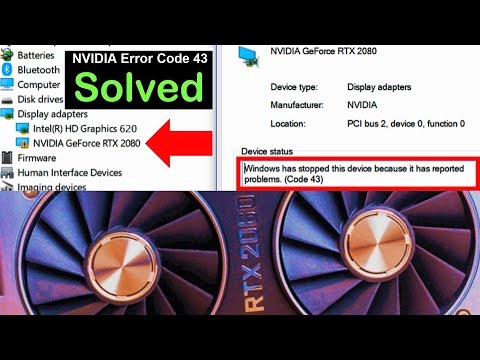
By ASA Technical Fix Windows encountered a problem during Graphics Driver installation NVIDIA Error Code 43 by ASA Technical

Title: 2025 Fix Graphics Card Not Detected in Windows 111087
Channel: Speedy Tutorials
2025 Fix Graphics Card Not Detected in Windows 111087 by Speedy Tutorials
Laptop Working
Graphics Card Laptop DEAD? Fix It NOW! (Easy Steps)
It's a heart-stopping moment. You boot up your laptop, eager to dive into your work, game, or creative project, but the screen remains stubbornly blank, flickers erratically, or displays a mosaic of distorted colors. The culprit? A likely malfunction within your laptop's graphics card. Don't despair just yet! While a dead graphics card can be a significant hurdle, it doesn't always spell the end of your laptop. With careful diagnostic steps and a bit of know-how, we can hopefully revive your machine and get you back up and running. This guide will walk you through the troubleshooting process, offering practical solutions and a clear roadmap to identify and address the issue.
Identifying the Symptoms: What's Really Going On?
Before launching into repairs, it's crucial to accurately pinpoint the problem. Different symptoms can indicate different underlying causes. Thoroughly observe the behavior of your laptop. Here are some of the most common indicators of a graphics card problem:
No Display at All (Black Screen): This is perhaps the most frightening symptom. The laptop powers on (you might hear the fan, see the power light), but the screen remains completely dark. This could be a hardware failure but could also be a software issue.
Distorted or Flickering Screen: Horizontal or vertical lines, color distortions (e.g., green tints, pixelation), or constant flickering are often a direct indication of a graphics card malfunction or a connection issue.
Unusual Graphic Artifacts: Random squares, triangles, or other geometric shapes appearing on the screen are another telltale sign. This often points to memory errors within the graphics card itself.
System Crashes or Freezes: Frequent crashes, especially during graphically intensive tasks (gaming, video editing), suggest the graphics card is struggling to handle the workload and is causing the system to shutdown.
Inability to Boot into the Operating System: Your laptop might hang during the startup sequence, preventing you from reaching the login screen, or displaying error messages related to video initialization.
Reduced Performance in Games or Applications: A noticeable drop in frame rates, stuttering, or general sluggishness, even in less demanding applications, could be a hint of graphics card failing.
Initial Troubleshooting: Quick Fixes Before You Panic
Before concluding that your graphics card is permanently deceased, consider these simple preliminary checks. They can often resolve common issues quickly:
Power Cycle: This is the first step: completely shut down your laptop (not just sleep or hibernate) and disconnect the power adapter. Remove the battery (if possible) and press and hold the power button for 30 seconds. Reconnect the battery (if removed) and power adapter, then try starting your laptop. This can sometimes clear temporary glitches.
External Monitor Test: Connect your laptop to an external monitor via HDMI or VGA. If the external monitor displays a picture, the problem might be with your laptop's screen or the connection to the screen, not necessarily the graphics card itself.
Safe Mode Boot: Boot your laptop into Safe Mode. This mode loads Windows with minimal drivers, including a basic graphics driver. If your laptop starts in Safe Mode without graphical issues, it strongly suggests a driver or software conflict is the problem. To access Safe Mode, repeatedly press the F8 (sometimes F12 or Del) key while your laptop is booting up, and select "Safe Mode" (or the equivalent option for your operating system) from the boot menu.
Driver Reinstallation: If your laptop boots into Windows, try uninstalling and reinstalling your graphics drivers. You can do this through the Device Manager (search for "Device Manager" in the start menu). Expand "Display adapters," right-click on your graphics card (it’ll be listed as NVIDIA or AMD generally, or something generic like Microsoft Basic Display Adapter if the proper drivers aren't installed), and select "Uninstall device." Then, restart your laptop. Windows should attempt to reinstall the default drivers, or you can download the latest drivers from the manufacturer's website (NVIDIA, AMD, or your laptop's manufacturer) and install them manually.
Digging Deeper: Advanced Diagnostics and Solutions
If the initial troubleshooting steps didn't solve the problem, it's time for more in-depth investigation.
Check for Overheating: Overheating is a common cause of graphics card failures. Run a diagnostic test to determine if the temperature is the problem. If the laptop is running too hot, it can stress the GPU and diminish its abilities. Consider a cooling pad or repasting the thermal compound as a solution.
Internal Component Check: If you are comfortable working with the inside of your laptop, carefully open it up, making sure to disconnect the power source and battery.
- Visual Inspection: Look for any obvious signs of damage: burnt components, bulging capacitors, or loose connections around the graphics card.
- Reseat the Graphics Card (If applicable): Some laptops have discrete (removable) graphics cards. Carefully remove and reseat the card, ensuring it's properly connected.
- Clean the Fan and Vents: Dust accumulation can exacerbate overheating. Clean the fan and vents thoroughly with compressed air.
Memory Test: If you suspect memory errors (artifacts, crashes), you can run a memory test. Windows Memory Diagnostic tool to test your RAM modules.
- BIOS Level Diagnosis: For more advanced testing, utilize the BIOS of your laptop. This can help you determine the status of your hardware components.
BIOS Update: Ensure your laptop's BIOS (Basic Input/Output System) is up-to-date. BIOS updates sometimes include improvements to graphics performance and compatibility. Visit your laptop manufacturer's website to download and install the latest BIOS version.
Replacing or Repairing the Graphics Card: Your Options
If you've exhausted all troubleshooting steps, and the graphics card is confirmed to be the problem, you have a few potential paths forward:
Replace the Graphics Card (If Possible): The feasibility of replacement depends on your laptop model. Some laptops use a discrete (separate) graphics card that can be replaced. Others have the graphics card integrated (soldered) onto the motherboard. If your card is replaceable, find the correct replacement model (make sure it is compatible with your laptop's model), order one, and install it, if possible.
Motherboard Replacement: If the graphics card is integrated and faulty, you likely have to replace the entire motherboard. This is often a more expensive repair. Consider the laptop's age and value to decide if it's the right choice.
Professional Repair: Take your laptop to a qualified repair shop. They can diagnose the problem more accurately, repair the existing graphics card (e.g., by reflowing the solder), or replace the component. This is often the best option if you're uncomfortable performing the repairs.
Consider an External Graphics Card (eGPU): If you have a Thunderbolt port, consider using an eGPU. Your laptop can use an external graphics card. This provides a significant performance boost and a workaround for a failing internal graphics card.
Preventive Measures: Protecting Your Investment
Once you've fixed the problem, or are contemplating repairs, take steps to protect your laptop's graphics card:
Proper Ventilation: Ensure your laptop has adequate ventilation. Avoid using it on soft surfaces (beds, couches) that can block the vents. Use a cooling pad for prolonged gaming or other intensive tasks.
Regular Maintenance: Clean your laptop's fan and vents regularly to prevent dust buildup.
Driver Updates: Keep your graphics drivers updated to the latest version.
Avoid Overclocking: Overclocking the graphics card can improve performance but also potentially cause overheating and damage.
Monitor Temperatures: Use software tools to monitor your graphics card's temperature, especially during intensive tasks.
By meticulously following these steps, you can significantly increase your chances of diagnosing, repairing, and resurrecting your dead graphics card laptop. Remember to approach each step with patience and care. Good luck, and get those frames back!
