hdmi laptop to displayport monitor not working

Title: HDMI To DisplayPort Not Working - How To Fix SOLVED
Channel: Silicophilic
HDMI To DisplayPort Not Working - How To Fix SOLVED by Silicophilic
hdmi laptop to displayport monitor not working, hp laptop hdmi to displayport monitor not working, laptop hdmi to dp monitor not working, hdmi to displayport not working laptop, hp monitor not detected hdmi to displayport
HDMI to DisplayPort FAIL? FIX Your Laptop Screen NOW!
Laptop Screen Troubles? Conquer HDMI to DisplayPort Connection Chaos!
Ever hooked up your laptop to an external display, anticipating glorious screen real estate, only to be met with… nothing? Or worse, a flickering, distorted mess? You’re not alone. The HDMI to DisplayPort connection can be a real headache. This article dives deep to rescue your productivity and streaming sessions. Let’s troubleshoot those frustrating display issues.
Decoding the DisplayPort Dilemma
So, what goes wrong when you try to connect via HDMI to DisplayPort? Often, the problem boils down to compatibility and signal conversion. HDMI and DisplayPort are both digital interfaces, but they function differently. HDMI (High-Definition Multimedia Interface) is ubiquitous. DisplayPort, on the other hand, is more common on monitors, especially those boasting higher refresh rates and resolutions. Therefore, a simple cable isn't always the magic bullet.
Is Your Adapter the Culprit?
First things first: Check your adapter or cable. Is it truly a converter and not just a simple cable? Because the connection requires active signal conversion. A simple cable might pass the signal but won’t successfully convert it. Consequently, your screen stays stubbornly blank. Moreover, ensure your adapter supports the resolution and refresh rate you desire. Furthermore, verify it is compatible with your laptop's HDMI version and your monitor's DisplayPort version. After all, older standards might not deliver the optimal performance.
Powering Up for Success: External Power Explained
Many HDMI to DisplayPort adapters need external power. In fact, they usually feature a USB connection for power. Therefore, make sure you've plugged that USB into a working power source. Without that extra juice, the adapter can barely function. Sometimes, the simplest solution is the most effective. So, verify the power connection first.
Driver Drama: Wrestling with Your Graphics Card
Outdated or corrupted graphics drivers are another common roadblock. Your graphics card dictates how your laptop interacts with external displays. So, head to your laptop manufacturer's website. Then, download and install the latest drivers for your specific model. In addition, consider uninstalling and reinstalling the drivers. Doing so can often resolve underlying issues. Sometimes, a fresh start is all you need.
Resolution Revolution: Tweaking Your Display Settings
Once your drivers are in order, navigate to your display settings. You’ll find it within your operating system. Then, confirm that your external display is recognized. Furthermore, check the detected resolution and refresh rate. They might not be optimal. To fix this, experiment with different settings. You might have to manually adjust them to match your monitor's capabilities. Consequently, you could achieve the desired visual quality.
Investigating Input Sources: A Detective's Guide
Your monitor might be the problem. Therefore, make sure it’s set to the correct input source. It's a basic step but easily overlooked. Check the monitor's menu to ensure it’s selected DisplayPort, not HDMI. After that, try another DisplayPort cable or port. This will help you rule out a faulty cable or port.
Troubleshooting Tips for Peak Performance
Here are some further suggestions. They might help you pinpoint those pesky issues.
- Restart the dance: Restart your laptop and your monitor. This often clears up temporary glitches.
- Try another monitor: Test your laptop with a different DisplayPort monitor. It helps determine if the problem lies with your laptop or the original monitor.
- Inspect the ports: Carefully examine the HDMI and DisplayPort ports on both devices for any bent pins or debris.
- Consult your monitor's manual: It might offer specific troubleshooting advice tailored to your monitor.
- Look for firmware updates: Some monitors and adapters have firmware updates. They can often resolve compatibility problems.
The Final Verdict: Ensuring a Seamless Connection
Finally, achieving a successful HDMI to DisplayPort connection can be frustrating. However, by systematically checking each potential point of failure, you can get your external display working. Start with the basics. Verify your cable or adapter. Then, attend to your drivers. Don't forget to check your power source. By following these steps, you'll be well on your way to displaying brilliance. You can enjoy the benefits of a larger screen. Consequently, you can finally elevate your laptop experience. Good luck, and happy connecting!
Verizon Hotspot Laptop Magic: The Secret's Revealed!HDMI to DisplayPort FAIL? FIX Your Laptop Screen NOW!
Alright, let's be honest, haven’t we all been there? You're amped to hook up your laptop to that glorious external monitor, envisioning the productivity boost or the immersive gaming experience. You grab your trusty HDMI-to-DisplayPort cable, plug everything in… and crickets. The screen remains stubbornly dark, mocking your ambitions. Don’t panic! We’ve all faced the dreaded "HDMI to DisplayPort FAIL" scenario. And the good news? It’s often fixable. Sometimes, it's as simple as a setting tweak, and other times, it requires a bit more detective work. But trust me, we will get your screen shining again. Let’s dive in and demystify this frustrating tech hiccup.
1. The Initial Panic: Why Isn't My Laptop Displaying on My Monitor?
The first reaction is usually a groan, followed by a scramble to check the obvious. Is the cable plugged in correctly at both ends? Are you sure? (I’ve been caught out by this more times than I'd care to admit!). Is the monitor on? Is the laptop on? These might seem like silly questions, but they're the foundations. We’ve all been there. Remember that time I spent a frantic hour troubleshooting a printer only to realize it wasn't plugged in? Yeah, let's avoid doing that. Assuming you’ve covered the basics, let’s move on to the more technical stuff. Think of this as the equivalent of checking your vital signs before calling the doctor.
2. Understanding the HDMI to DisplayPort Connection: A Tale of Two Protocols
Before we start wrenching, let’s get a handle on what's happening under the hood. HDMI and DisplayPort, while both designed to transmit video and audio, speak slightly different technological languages. Think of them as siblings who speak different dialects of the same language. DisplayPort often has an advantage in terms of bandwidth and features, especially for higher refresh rates and resolutions, making it a favourite for gamers and professionals. However, HDMI is the more mainstream and widely compatible. This crucial difference means that the HDMI to DisplayPort cable doesn’t always work like a simple wire. It often requires active conversion-- in the signal, the cable itself needs to do some work. This is unlike a simple DisplayPort to DisplayPort connection where the signal passes seamlessly.
3. Troubleshooting Step 1: Check Your Laptop’s DisplayPort Output
This is where things can get a little confusing, especially with laptops. Many laptops don't have a dedicated DisplayPort output. Instead, they might feature a Thunderbolt port, a USB-C port, or something similar that can also function as a DisplayPort. This is like having a Swiss Army knife of ports, capable of doing everything, yet, sometimes, the connection doesn't want to cooperate.
- Identifying the Port: Check your laptop's documentation. Look for icons near the ports. A DisplayPort symbol is a straightforward “D” shape. Thunderbolt ports often have a lightning bolt beside the USB-C port.
- Testing the Port: If you're unsure, try connecting a DisplayPort cable (or a USB-C to DisplayPort adapter) directly to another monitor that uses DisplayPort if you have one. This tests the integrity of the port on your laptop.
- Is Your Adapter Problematic? If you're using an adapter (say, USB-C to DisplayPort) that can be another area which causes issues. Sometimes, a faulty adapter is the culprit.
4. Troubleshooting Step 2: The HDMI Cable's Role - Is It Defective?
Let's not forget the humble HDMI cable. It might seem like a simple piece of wire, but it's crucial to the connection.
- Testing the HDMI Cable: Try a known-good HDMI cable. If you have another HDMI device (like a game console or Blu-ray player), connect your laptop to your monitor using that. If it works, your HDMI cable is the likely villain.
- Checking the HDMI Port on Your Laptop: Sometimes the HDMI port on the laptop itself gets damaged. Check for bent or damaged pins.
- Cable Quality Matters Cheap HDMI cables can be unreliable. Invest in a cable that meets modern standards.
5. Troubleshooting Step 3: The Monitor’s Input Selection Dilemma
We've all been there, staring blankly at our screen while cursing the tech gods. But the magic of tech can be surprisingly simple, let's check the monitor!
- Selecting the Correct Input: Your monitor needs to know which type of signal (HDMI or DisplayPort) to look for. Use the monitor's menu (usually accessed via buttons on the monitor itself) to select the correct input source. It might be labelled as “HDMI 1,” “HDMI 2,” “DisplayPort,” etc. Make sure you've chosen the right one, matching the port you're using.
- The "No Signal" Trap: If you see “No Signal” on your monitor, this often means the monitor isn’t detecting any signal from your laptop. This could indicate a problem with the connection, the laptop, or the monitor itself. Double-check all connections and try rebooting both devices.
6. Troubleshooting Step 4: Laptop Settings: Display Configuration
This is where Windows (or your operating system of choice) comes into the game. Sometimes, your laptop isn't configured to use the external monitor.
- Detecting the External Display: Right-click on your desktop and select "Display Settings". In Windows, you should see a list of connected displays. If your monitor isn't listed, click "Detect". If it still doesn't work, then there might be a deeper issue.
- Extending, Duplicating, or Just Showing Blank?: Once your monitor is detected, you need to tell Windows how to use it.
- Extend (Recommended for Productivity): This extends your desktop across both screens, giving you more workspace.
- Duplicate (Useful for Presentations): This shows the same content on both screens.
- Show only on 2: This turns off the laptop screen, using only the external monitor.
- If Still Not Showing If your external monitor isn’t showing up, try changing these modes to see if that triggers it.
7. Troubleshooting Step 5: Driver Shenanigans
Outdated or corrupted graphic drivers are a common cause of display issues.
- Updating Graphics Drivers: Go to your laptop manufacturer’s website (e.g., Dell, HP, Lenovo) and download the latest drivers for your graphics card. Install them.
- Using Windows Update: Windows Update often provides the latest drivers. Go to Settings > Update & Security > Windows Update and check for updates.
- Reinstalling Drivers (The Nuclear Option): If updating doesn’t work, try uninstalling your graphics drivers (in Device Manager, under “Display adapters”) and then reinstalling them.
8. Troubleshooting Step 6: The Power of a Restart (The Tech Equivalent of "Did you try turning it off and on again?")
This is the go-to trick for any tech problem, and with good reason: It works! Restart both your laptop and your monitor. It might seem too simple, but it can often reset the connection and solve the problem. This also gives the drivers and software a chance to refresh.
9. Troubleshooting Step 7: The Cable's Secret Signals - Active Adapters vs. Passive Adapters
Remember how we mentioned the language barrier? Well, some HDMI-to-DisplayPort cables are "active" and others are "passive." Active cables have a built-in chip that translates the HDMI signal to DisplayPort, and are usually the better choice. Passive cables are simpler and rely on the devices to do the translation work, which doesn’t always work.
- Check the Cable: Review your cable's packaging or look for markings that indicate it's an active adapter.
- Try an Active Adapter: If you're using a passive cable, consider getting an active HDMI to DisplayPort adapter.
10. Audio Conundrums with HDMI-to-DisplayPort (And How to Address Them)
HDMI carries both video and audio, while DisplayPort does too, but it can sometimes get a touch convoluted.
- Check your Audio Settings: After connecting your monitor, go to your laptop's sound settings (right-click on the speaker icon in the system tray). Make sure your monitor is selected as the output device.
- Driver Issues: Again, make sure your graphics drivers are up-to-date, as this often resolves audio issues.
- The Monitor's Speakers: Many monitors have built-in speakers, so make sure they are turned on and adjusted.
11. High Refresh Rates and Resolution: Pushing the Limits of the Connection
Are you trying to run at a high refresh rate (like 144Hz or higher) or a high resolution? This can stress the connection.
- Check Cable Specifications: Ensure your HDMI cable supports the resolution and refresh rate you are trying to use. HDMI 2.0 or higher is recommended for 4K at higher refresh rates.
- Reduce the settings: temporarily lower the refresh rate or resolution within your laptop’s display settings to see if
Fix Displayport No Signal in Windows 1110 - 2025

By TechFixIT Fix Displayport No Signal in Windows 1110 - 2025 by TechFixIT
Laptop not detecting your monitor Heres how to fix it Asurion

By Asurion Laptop not detecting your monitor Heres how to fix it Asurion by Asurion
Displayport vs HDMI How to connect Laptop to Monitor for 240hz
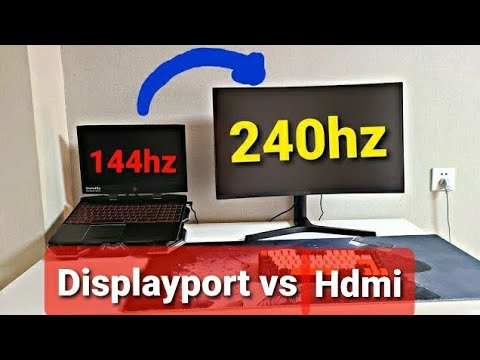
By SHEEPof5 Displayport vs HDMI How to connect Laptop to Monitor for 240hz by SHEEPof5

Title: Fix no signal on DisplayPort. Do not unplug.
Channel: thehoeslaper
Fix no signal on DisplayPort. Do not unplug. by thehoeslaper
Laptop Wifi Hotspot
HDMI to DisplayPort: Navigating the Screen Sync Struggle (And How to Conquer It!)
We've all been there: eager to extend our laptop screens, connect to that glorious external monitor, and bam – a flickering, non-existent, or just plain wrong image stares back at us. When we try to connect using HDMI to DisplayPort cable, confusion and frustration often reign supreme. But fear not, fellow tech enthusiasts! We are here to unpack this often-troublesome pairing and equip you with the knowledge to troubleshoot and triumph over screen sync woes. The HDMI to DisplayPort connection, while seemingly straightforward, can be a minefield of compatibility issues and signal translation challenges. Let’s delve into how to make this connection experience flawless.
Understanding the Dynamic Duo: HDMI and DisplayPort – A Quick Primer
Before we dive into troubleshooting, a fundamental understanding of HDMI and DisplayPort is crucial. Both are digital interfaces used to transmit audio and video signals, but they operate in fundamentally different ways. HDMI (High-Definition Multimedia Interface) is widely used in consumer electronics and is known for its ease of use and plug-and-play functionality. DisplayPort, on the other hand, is often found on computers and is generally considered to be a more versatile and robust interface, offering features like higher bandwidth and support for multiple displays.
The core difference lies in their signal transmission methods. DisplayPort utilizes a packet-based system, allowing for dynamic allocation of bandwidth and efficient handling of multiple streams of audio and video data. HDMI, while advanced, uses a more traditional clock-based system. This differences can cause compatibility problems with the conversion from HDMI to DisplayPort. A crucial factor is that HDMI-to-DisplayPort converters are inherently one-way. You can convert from HDMI to DisplayPort, but not the other way around without a powered, active adapter. This directionality is a key detail.
Common Culprits: Why Your Screen Isn't Playing Nice
Now, let's get to the heart of the matter: the problems. Several factors can contribute to a failed HDMI to DisplayPort connection. Pinpointing the issue is the first step in finding a solution.
- Compatibility Conundrums: The biggest hurdle is the inherent incompatibility. While DisplayPort monitors usually accept DisplayPort input, and some will accept HDMI, not all DisplayPort monitors readily accept HDMI signals directly. The same applies to your laptop. Your laptop’s HDMI port might be a newer specification, but older DisplayPort monitors might not support the latest HDMI revisions.
- Cable Chaos: The quality of the HDMI to DisplayPort cable is paramount. Cheap, poorly constructed cables can easily introduce signal degradation, leading to flickering, distortion, or complete signal loss. Always opt for a certified cable that meets the latest HDMI specifications. Look for cables that explicitly state they support the desired resolution and refresh rate.
- Adapter Angst (Active vs. Passive): As mentioned earlier, the type of adapter you use significantly impacts performance. Passive adapters are simple, cheap devices that can only do some conversions. Active adapters, on the other hand, contain a built-in chip that performs the necessary signal conversion, allowing them to handle more complex scenarios and usually provide a better experience. For most HDMI to DisplayPort connections, an active adapter is essential.
- Resolution and Refresh Rate Realities: Ensure your laptop, HDMI to DisplayPort adapter, and monitor all support the desired resolution and refresh rate. Trying to push a signal beyond the capabilities of any one component will result in failure. Check the specifications of each device to identify the maximum supported resolutions and refresh rates.
- Driver Drama: Outdated or corrupted graphics drivers on your laptop can wreak havoc on external display connections. Ensure your laptop's graphics card drivers are up to date. Visit the manufacturer's website (NVIDIA, AMD, or Intel) to download and install the latest available drivers.
- Port Power Play: Some DisplayPort monitors or adapters might require external power to function correctly. Ensure that the adapters receive power from a reliable source if required.
- HDCP Hiccups: High-bandwidth Digital Content Protection (HDCP) is a copy protection protocol that can sometimes interfere with video playback. If you're encountering problems with streaming content, consider disabling HDCP in your graphics card settings (if possible) or trying a different HDMI cable.
Troubleshooting Tactics: Your Path to a Seamless Screen
Now, let’s get practical. Here's a step-by-step guide to troubleshooting your HDMI to DisplayPort connection.
- The Obvious Checklist:
- Double-check all connections. Make sure the HDMI cable is securely plugged into your laptop and the adapter (or monitor with HDMI) and displayport is firmly connected to your monitor.
- Ensure all devices are powered on. It sounds simple, but it's often overlooked.
- Try a different HDMI to DisplayPort cable. This is a quick way to rule out a faulty cable.
- Adapter Assurance: If you're using an adapter, confirm that it’s an active HDMI to DisplayPort adapter, not a passive one. Passive adapters seldom work and are a frequent source of frustration. Actives ones have a chip inside, and they often, but not always, have an external power source.
- Driver Diagnostics:
- Right-click on the Windows Start button and select "Device Manager."
- Expand the "Display adapters" section.
- Right-click on your graphics card (e.g., NVIDIA GeForce RTX 3070) and select "Update driver." Follow the prompts to search for and install the latest drivers.
- If updating doesn't resolve the issue, try uninstalling the driver and restarting your computer. Windows should automatically reinstall a default driver. Then try updating again.
- Resolution Renegotiation:
- Right-click on your desktop and select "Display settings."
- Under "Multiple displays," select "Extend these displays" or "Duplicate these displays," depending on your desired setup.
- Select your external monitor from the display list.
- Adjust the "Display resolution" to a lower setting to see if it works. Then gradually increase the resolution to the desired level.
- Experiment with different refresh rates (e.g., 60Hz, 75Hz) to find the optimal setting for your monitor.
- Monitor Mastery:
- Check your monitor's on-screen display (OSD) menu. Many monitors have settings specifically for input selection and signal detection. Make sure the monitor is set to the correct DisplayPort input. Also, check for any power-saving features that might be interfering with the signal.
- Power Play Prowess: If your adapter requires external power, ensure it's properly connected to a working power outlet. Try a different outlet to eliminate any power supply issues.
- Testing Time (Isolate the Issue): If possible, test with different devices. Connect your laptop to a different monitor with a native DisplayPort input, and connect a different device with an HDMI output (e.g., a game console) to the monitor or the adapter. This will help you isolate whether the issue lies with your laptop, the adapter, or the monitor.
- Contact, Confirm, and Conquer: If all else fails, consult the documentation for your laptop, monitor, and adapter. Contact the manufacturers’ support teams. They might have specific troubleshooting steps or solutions that apply to your particular hardware configuration.
Advanced Tactics: Fine-Tuning Your Setup
For advanced users, here are some additional methods you can utilize.
- EDID Override: Extended Display Identification Data (EDID) is the information your monitor provides to your computer about its capabilities (resolution, refresh rate, supported technologies, etc.). Sometimes, EDID issues can cause display problems. You can try forcing your computer to use a specific EDID profile. Be cautious, as incorrect EDID settings can damage your monitor, but in certain specific situations, it assists.
- GPU Control Panel Tweaks: Both NVIDIA and AMD graphics cards have control panel utilities that allow you to adjust various settings. Explore these settings to ensure the appropriate resolutions and refresh rates are selected for your external monitor. There may also be options to override EDID information or force a specific output format.
- Firmware Fixes: Check if your DisplayPort monitor or HDMI to DisplayPort adapter has any available firmware updates. Firmware updates can sometimes resolve compatibility issues and improve performance. Consult the manufacturer's website for instructions on how to update the firmware.
Conclusion: Your Screen Sync Saga Ends Here
By understanding the fundamentals, troubleshooting systematically, and employing these advanced techniques, you can conquer the challenges that come with HDMI to DisplayPort connections and enjoy a seamless extended display experience. Remember to be patient and persistent, as troubleshooting can sometimes take time. With these insights, you’re now equipped to address those pesky screen sync failures and unlock the full potential of your multiple monitor setup. Go forth, and conquer the screen!
