can a lenovo dock work dor dell laptop

Title: How to setup the Lenovo ThinkPad USB C Dock
Channel: Let Me Fix It
How to setup the Lenovo ThinkPad USB C Dock by Let Me Fix It
Lenovo Dock on Dell Laptop? This SHOCKING Truth Will Surprise You!
SEO Title: Can a Lenovo Dock Power Your Dell Laptop? Unveiling the Unexpected Compatibility Secrets!
Introduction: The Docking Station Dilemma
We've all been there, haven't we? You're staring at your desk, a tangle of wires a testament to the digital age. One crucial piece of the puzzle: the docking station. This hub consolidates all your peripherals. But what happens when you're mixing brands? Can a Lenovo dock truly play nice with a Dell laptop? Prepare to have your assumptions challenged. This question is more common than you think.
The Brand Barrier: A Perceived Obstacle
Initially, it seems counterintuitive. Lenovo makes laptops. Dell makes laptops. Shouldn't their accessories be exclusive? It's a logical assumption. We often compartmentalize our tech, expecting brand-specific ecosystems. However, technology evolves. That means the limitations are fewer than we imagine.
Dissecting the Docking Station: What Makes It Tick?
A docking station's purpose is remarkably simple. It's designed to be a port extender. Think of it as a super-powered USB hub, but with more features. It offers multiple ports. These include USB-A, USB-C, HDMI, and Ethernet. These ports help connect your laptop to various devices. Its core function is standardization so we can use them.
Compatibility Codes: Decoding the Connections
The magic lies within the universal standards. USB-C is a prime example. USB-C ports transfer data, power, and video signals. Many modern laptops utilize this versatile port. If your Dell laptop features a USB-C port, the compatibility odds greatly improve. Therefore, a Lenovo dock might just work. However, keep in mind the subtleties. Certain features might vary.
USB-C Docking: A Universal Language
USB-C represents a significant breakthrough. It's a common connector. It allows for broad compatibility across brands. To truly assess compatibility, check the dock’s specifications. Then, compare those specifications to your Dell laptop's ports. Take into account all the functions you would like to use.
Power Delivery: A Crucial Consideration
Power delivery is a vital aspect. A docking station can often charge your laptop. Ensure the dock delivers the required wattage. Otherwise, your Dell might not charge, or charge slowly. Your laptop's power adapter provides a clue. This helps you determine the necessary wattage.
Video Outputs: Ensuring Visual Harmony
Consider the video outputs. Think about the monitors you plan to connect. Does the dock support the resolutions and refresh rates? Check the specifications for HDMI or DisplayPort. These specifications determine if your setup works.
The Docking Station Ecosystem: Beyond Simple Connection
The docking station’s ecosystem goes beyond simple connection. It incorporates drivers and software. Check for driver compatibility. This step is critical for seamless operation. The Lenovo dock should support your Dell laptop's operating system. These steps will help you.
Testing the Waters: A Practical Approach
Before committing, test the setup. This can prevent potential headaches. Try connecting the Lenovo dock to your Dell laptop. Test all the ports. Make sure each function works appropriately.
Real-World Experiences: User Insights
Seek out real-world user experiences. Online forums are an incredible resource. Search for others who have used Lenovo docks with Dell laptops. Their feedback provides valuable insights. From their experience, you will know more what works.
Troubleshooting Tips: Addressing Potential Issues
If you encounter problems, don't despair. Update your laptop's drivers. Also, update your dock's firmware. These steps can resolve many compatibility issues. Furthermore, consult Lenovo's or Dell's support resources.
The Shocking Truth Revealed: It's Possible!
Yes, the results are surprising! A Lenovo dock can work with a Dell laptop. Modern technology embraces cross-compatibility. However, thorough assessment is crucial. Consider port types, power delivery, and video outputs.
Conclusion: Embracing Tech Flexibility
The tech landscape is shifting. Therefore, brand silos are becoming less rigid. You can often mix and match accessories. Never blindly assume incompatibility. Instead, embrace the potential. Your perfect setup might await. Don’t be afraid to explore the possibilities. You will be happy you did.
Grad School Crusher: The BEST Laptops for Science & Work!Lenovo Dock on Dell Laptop? This SHOCKING Truth Will Surprise You!
Hey tech enthusiasts! Ever found yourself in a bit of a pickle, staring at a Lenovo dock and a Dell laptop, wondering if they'd even speak to each other? We've all been there. The promise of a universal dock – a single connection to rule them all – is alluring. But does it actually work? The answer, my friends, is a bit more nuanced than a simple "yes" or "no." Buckle up, because we're about to dive deep into the rabbit hole of compatibility, performance, and whether or not you're about to experience a tech miracle… or a major headache.
1. The Universal Dock Dream: Is It Real?
Let's be honest, the idea of a one-size-fits-all docking solution is the holy grail of the modern office. Imagine: one cable, and boom! Your laptop is connected to your monitor, keyboard, mouse, external hard drive, and even your charging cable. It's a beautiful vision, isn't it? Unfortunately, the reality is often a bit more… complicated. While the concept of a universal dock is technically true, the execution can be tricky. Think of it like trying to merge two different ecosystems – sometimes it works seamlessly, and other times, you're left with a frustrating jumble of glitches and compromises.
2. Unveiling the Core Compatibility Conundrum
The biggest hurdle to overcome is the fundamental difference in hardware and software. Dell and Lenovo, while both giants in the laptop world, don't necessarily play by the same rules. Their drivers, their firmware, and their proprietary technologies can create a compatibility minefield. It's not always a matter of a simple "plug and play."
3. Thunderbolt vs. USB-C: The Key to (Potential) Bliss
Here’s where things start to get interesting. The type of connection on both your Lenovo dock and your Dell laptop plays a huge role. If both devices support Thunderbolt, your chances of a smooth experience increase astronomically. Thunderbolt, built on the USB-C standard, offers incredible bandwidth, allowing for data transfer, video output, and power delivery all through a single port. Think of it as the superhighway of connectivity. USB-C, while also a contender, might limit the capabilities. Video output might be restricted, and the overall performance will be less than perfect.
4. So, Will a Lenovo Dock Actually Work on Your Dell?
The answer is a tentative "maybe." It really depends on a few key factors:
- The Connection: Does your Dell laptop have a Thunderbolt port? This is your best bet for compatibility.
- The Dock's Specifications: Does the Lenovo dock support the same USB-C or Thunderbolt standard as your Dell laptop?
- Driver Compatibility: This is crucial. You'll likely need to install drivers from Lenovo, and hopefully, they play nice with your Dell's system.
- Power Delivery: Does the dock provide enough power to charge your Dell laptop? This is a vital consideration.
- External Devices: Are you planning on plugging in multiple monitors, hard drives, and other peripherals? The more devices, the greater the chance of encountering issues.
5. Setting Expectations: Don’t Expect Miracles (Yet!)
Even if everything seems to align perfectly, don't expect a flawless experience. You might encounter occasional glitches, driver conflicts, or performance hiccups. It's like trying to teach your dog to play chess – they might get the general idea, but they're never going to be a grandmaster.
6. Powering Up! The Charging Quandary
This is a HUGE consideration. Does the Lenovo dock have enough power to charge your Dell laptop? Some docks are only designed to deliver a certain wattage, which might not be sufficient for a power-hungry Dell. Always check the power delivery specifications of both the dock and your laptop to ensure compatibility. Imagine trying to fuel a race car with a scooter's engine – it just won't work.
7. The Driver's Seat: Mastering the Installation Process
Installing the correct Lenovo dock drivers is essential. Head over to the Lenovo website, identify your specific dock model, and download the latest drivers. Then, follow the installation instructions meticulously. This can be your make-or-break moment. Poorly installed drivers can lead to all sorts of problems, from video display issues to a complete inability to connect to the dock. It's like assembling IKEA furniture – follow the instructions, or you'll end up with a wobbly mess.
8. Testing, Testing, 1-2-3: A Practical Checklist
Before declaring victory, here's a quick checklist to ensure everything's running smoothly:
- Video Output: Does your monitor display the correct resolution and refresh rate?
- USB Peripherals: Are your keyboard, mouse, and other USB devices working as expected?
- Ethernet Connectivity: Can you connect to the internet via the dock's Ethernet port?
- Audio Output: Is sound coming through your external speakers or headphones?
- Charging: Is your laptop properly charging?
9. The Monitor Mayhem: Multiple Displays and Their Challenges
Connecting multiple monitors can be particularly challenging. The dock's capabilities and the laptop's graphics card will determine how many displays you can use and the maximum resolution and refresh rates supported. Be prepared for some potential limitations. It may require some adjustments in display settings.
10. Troubleshooting Troubles: What to Do When Things Go Wrong
If you encounter problems, don't panic! Here's a troubleshooting guide:
- Restart Everything: This sounds cliché, but a simple reboot can often resolve minor glitches.
- Driver Updates: Ensure you have the latest drivers installed for both the dock and your Dell laptop.
- Cable Check: Make sure your USB-C or Thunderbolt cable is securely connected. Sometimes it is that simple.
- Contact Support: If all else fails, reach out to Lenovo and Dell support for assistance.
11. The BIOS Battlefield: Firmware and Compatibility
Occasionally, the BIOS (Basic Input/Output System) of your Dell laptop might need a little tweaking to play nicely with the Lenovo dock. This is a more advanced step, and you should only attempt it if you're comfortable navigating the BIOS settings. Incorrectly configured settings can create more problems.
12. The Alternative Adventure: Dell's Own Docking Solutions
Let's be honest, using a Dell-branded dock with your Dell laptop is generally the most guaranteed route to a seamless experience. Dell docks are specifically designed for compatibility, and you're less likely to encounter driver issues or performance bottlenecks. If compatibility is your top priority, it's a no-brainer.
13. Weighing the Pros and Cons: Is It Worth It?
Here's a quick breakdown to help you decide:
Pros:
- Potential for cost savings (if you already own a Lenovo dock).
- Convenience of a single docking solution.
- Flexibility to use one dock for multiple laptops.
Cons:
- Potential for compatibility issues.
- Driver headaches.
- Potential performance limitations.
14. The Future Forward: Trends in Docking Technology
The world of docking stations is constantly evolving. We’re seeing improvements in universal compatibility, increased bandwidth, wireless docking solutions, and more. The future of docking is looking bright.
15. The Verdict: A Gentle Word of Caution
So, can you use a Lenovo dock on a Dell laptop? The answer is "maybe," with a strong emphasis on "proceed with caution." If you're feeling adventurous and have the right hardware (especially Thunderbolt), give it a shot. Prepare for some potential bumps in the road, and always prioritize driver compatibility. Maybe it will be smooth sailing.
Conclusion
Ultimately, the decision of whether to use a Lenovo dock with your Dell laptop boils down to your individual needs and comfort level with technology. If you're seeking a guaranteed, hassle-free experience, a Dell-branded dock is probably your best bet. However, if you already own a Lenovo dock and are willing to troubleshoot potential issues, it might be worth a try – especially with a Thunderbolt connection. Just remember to set your expectations accordingly and be prepared for a few tech adventures along the way. Good luck, and happy docking!
Frequently Asked Questions (FAQs)
Will a Lenovo dock damage my Dell laptop?
No. As long as you use the correct ports and cables, and the dock's power delivery meets your laptop's requirements, there is no risk of damage. However, incorrect driver installation still may cause issues.
Do I need to install any special software on my Dell laptop to use a Lenovo dock?
Yes, you'll typically need to install the drivers for the Lenovo dock, available on the Lenovo website.
What if my Lenovo dock doesn't charge my Dell laptop?
Double-check the power delivery specifications of both the dock and your laptop. If the dock's power output is insufficient, it won't be able to charge your laptop. You may want to get a higher power dock.
Is there a warranty on the Lenovo dock if I use it with my Dell laptop?
The warranty typically covers the dock itself. However, if any damage occurs to your Dell laptop due to a defect in the dock, it
Dell WD19 Docks - Any Good Worth The Cost Do They Work With Other Laptops

By Tech3D Dell WD19 Docks - Any Good Worth The Cost Do They Work With Other Laptops by Tech3D
Dell XPS 15 9570 Compatibility with Lenovo ThinkPad Thunderbolt Docking Station
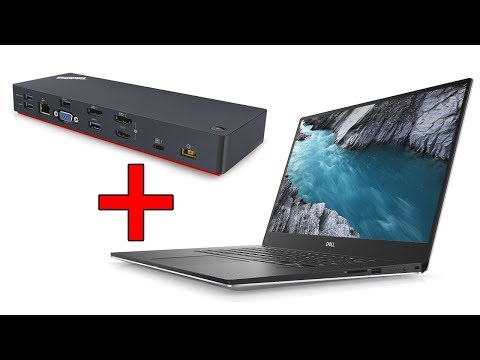
By neoteric Dell XPS 15 9570 Compatibility with Lenovo ThinkPad Thunderbolt Docking Station by neoteric
Connecting two monitors-Lenovo thinkpad hybrid USB-C to USB-A Dock

By engineerslodge Connecting two monitors-Lenovo thinkpad hybrid USB-C to USB-A Dock by engineerslodge

Title: Dell Docking Station Setup
Channel: SVSU ITD Lab
Dell Docking Station Setup by SVSU ITD Lab
Working With Laptop
Lenovo Dock on Dell Laptop? This SHOCKING Truth Will Surprise You!
Navigating the world of laptop accessories can often feel like traversing a minefield. Cross-compatibility, driver conflicts, and simply understanding what will work with your specific setup can be a source of endless frustration. This is especially true when combining brands, such as utilizing a Lenovo docking station with a Dell laptop. We delve into this intersection, revealing insights that will reshape your understanding of docking stations and their potential limitations.
Understanding the Docking Station Ecosystem
Before we delve into the Lenovo-Dell connection, a foundational understanding of docking stations is crucial. These devices serve as central hubs, expanding the functionality of your laptop with a single connection. They typically provide ports for:
- External Displays: Connecting multiple monitors to enhance productivity.
- USB Peripherals: Keyboard, mouse, external hard drives, and other accessories.
- Network Connectivity: Gigabit Ethernet for wired internet access.
- Power Delivery: Charging your laptop through the docking station.
- Audio: Headphone and microphone jacks for convenient audio input/output.
Docking stations can vary widely in their connectivity options, supported technologies, and overall performance. They are designed for convenience, transforming a laptop into a desktop-like setup with a single cable. However, the intricacies of compatibility are often masked by marketing jargon, obscuring the potential pitfalls of using docks across different brands.
The Lenovo Docking Station: A Closer Look
Lenovo offers a diverse range of docking stations catering to various laptops and usage scenarios. They typically feature proprietary technologies designed to optimize performance with Lenovo ThinkPads and other Lenovo laptops. These technologies often include:
- ThinkPad Docking Stations: These docks are specifically designed for ThinkPads and often feature advanced features like MAC address pass-through and power-on functionality.
- USB-C Docks: Leveraging the USB-C standard for both data transfer, power delivery, and video output, offering a streamlined single-cable connection.
- Thunderbolt Docks: Utilizing the high-bandwidth Thunderbolt interface for maximum performance, capable of supporting multiple high-resolution displays and rapid data transfer speeds.
- Proprietary Docking Systems: Lenovo has used a variety of proprietary docking port solutions, such as side docking ports, which are usually less compatible with other brands' laptops.
The specific features and capabilities of a Lenovo docking station are tied to the models, ranging from budget-friendly options to high-end enterprise solutions.
Dell Laptops: A World of Diverse Options
Dell, a significant player in the laptop market, offers an equally broad selection of laptops across various product lines, including XPS, Latitude, and Inspiron series. This diversity influences the compatibility landscape significantly. Dell laptops encompass a spectrum of technologies, including:
- USB-C Connectivity: USB-C has become a standard across many Dell laptops, facilitating docking station compatibility.
- Thunderbolt Support: High-end Dell laptops often incorporate Thunderbolt ports, enabling the use of high-performance docking stations.
- Proprietary Docking Ports: Dell employs its proprietary docking solutions, often found in their professional-grade Latitude series, which might not be universally compatible with all Lenovo docks.
The Dell laptop model, its features, and underlying technological framework are critical factors that determine how well it will integrate with a Lenovo docking station.
The Shocking Truth: Compatibility Considerations
Now, the pivotal question: can you reliably use a Lenovo docking station with a Dell laptop? The answer is multifaceted and, frankly, more nuanced than many realize. Here's where the “shocking truth” emerges:
- USB-C Based Docks: A Glimmer of Hope: Lenovo USB-C docking stations often exhibit the best chance of compatibility with Dell laptops, provided the Dell laptop has a USB-C port that supports "DisplayPort Alternate Mode" (DP Alt Mode), which enables video output over the USB-C connection. Additionally, the Dell laptop needs to support USB Power Delivery (PD) to receive power from the dock. However, even with compatible ports, there are no guarantees of flawless performance. Issues can arise, causing display problems, USB device connectivity interruptions, and inconsistent charging.
- Thunderbolt Compatibility: A More Promising Scenario: If both the Lenovo docking station and the Dell laptop feature Thunderbolt ports, the prospects for seamless compatibility are significantly improved. Thunderbolt offers a higher bandwidth, enabling more seamless integration of displays, data transfer, and device compatibility. However, even in this case, testing and driver compatibility must be carefully considered.
- Proprietary Docking Solutions: Likely to Fail: Lenovo docking stations utilizing Lenovo's proprietary docking ports are generally not compatible with Dell laptops. These systems often rely on specific hardware and firmware configurations designed for Lenovo laptops.
- Driver and Firmware Challenges: Even if the physical ports are compatible, driver and firmware issues are frequent. Lenovo docks are optimized for Lenovo laptops, and drivers may not function ideally or at all on a Dell system. You might be required to install separate drivers, experiment with different driver versions, or encounter conflicts.
- Power Delivery Concerns: The power delivery capabilities of the Lenovo docking station and the power requirements of the Dell laptop need to match. If the dock doesn't supply sufficient power, your Dell laptop might not charge, or it might charge slowly.
- Feature Limitations: Be prepared for some features to not work. For example, the wake-on-LAN function of the Lenovo dock, designed to power on compatible Lenovo laptops, may be incompatible with a Dell laptop. Similarly, the MAC address pass-through feature may not be supported.
The Art of Making it (Potentially) Work
If you're determined to use a Lenovo docking station with a Dell laptop, these strategies can help:
- Rigorous Research is Paramount: Before purchasing a Lenovo dock, carefully investigate the specifications of your Dell laptop. Check the USB-C or Thunderbolt port specifications. Read user reviews of the specific dock and Dell laptop combination.
- Prioritize USB-C or Thunderbolt Docks: These are your best bets for compatibility, offering more standard connections. Avoid proprietary docking systems.
- Driver Updates: Always install the latest drivers for both the Lenovo dock and the Dell laptop's USB-C or Thunderbolt port.
- BIOS Updates: Ensure that the BIOS on your Dell laptop is up to date. Firmware updates can resolve compatibility issues.
- Testing is Crucial: Before investing in a Lenovo dock, if possible, test it with your Dell laptop. Borrow one, or purchase from a retailer with a generous return policy.
- Consider Alternatives: Dell-branded docking stations are specifically designed for Dell laptops. They may offer a more reliable experience. Universal docking stations, designed to work with a broad range of laptops, are another option, but they can come with performance trade-offs.
The Bottom Line: Manage Your Expectations
Using a Lenovo docking station with a Dell laptop can be a hit-or-miss proposition. While USB-C and Thunderbolt docks offer the most promising compatibility scenarios, you should anticipate potential issues with drivers, features, and overall performance. Carefully manage your expectations, perform thorough research, and be prepared for the occasional hiccup. In some instances, selecting a Dell-branded or universal docking station provides a smoother, more reliable experience. The journey into cross-brand docking, while sometimes successful, often demands patience, technical know-how, and a willingness to embrace the inherent complexities of inter-brand product integration. Remember compatibility is not always guaranteed, so proceed with reasonable expectations.
