does razer core work with any desktop or laptop

Title: EasyWorship Reviews eGPUs Razer Core X Chroma
Channel: EasyWorshipSoftware
EasyWorship Reviews eGPUs Razer Core X Chroma by EasyWorshipSoftware
Razer Core X: Mythbusters! Does it REALLY Work with YOUR PC?
Razer Core X: Decoding the eGPU Enigma – Does it Truly Game Ready?
Ever dreamt of supercharging your laptop's graphics prowess? You’re not alone. Many PC gamers crave desktop-level performance on the go. The Razer Core X promises precisely that: a plug-and-play external GPU solution. But does this sleek black box truly deliver? Let's dive deep, shall we? We're going to debunk the myths and uncover the realities.
The Allure of External Graphics: A Gamer's Paradise?
Let’s be honest, the appeal is enormous. Imagine this: a thin and light laptop, capable of handling everyday tasks with ease. Then, you dock it into the Core X. Suddenly, it transforms. You now have incredible gaming power. However, the promises of eGPUs are often grand. They can be misleading. Consequently, reality demands a closer look.
Unboxing the Beast: First Impressions Matter
The Razer Core X itself is undeniably stylish. Its brushed aluminum chassis exudes quality. The design is clean and understated. It fits seamlessly into most setups. The simplicity is a major selling point. In the box, you find the enclosure and a power cord. The power supply unit (PSU) boasts ample wattage. This ensures compatibility with high-end GPUs. Getting started feels pretty straightforward.
Compatibility Crossroads: Your PC's Role
Compatibility becomes a crucial factor. Not every PC works flawlessly with the Core X. Specifically, Thunderbolt 3 is non-negotiable. This is your connection to the outside world. Your laptop needs it. Also, ensure your computer meets minimum system requirements. Check Razer’s website for a compatibility list. However, it's not exhaustive. Sometimes, trial and error is inevitable. Therefore, research your specific laptop model.
Installation: From Box to Battlefield (Mostly)
The setup process is generally user-friendly. However, it's not always plug-and-play. First, you'll need to install the GPU. Slide off the side panel. Then, secure your graphics card inside. Next, connect the Thunderbolt 3 cable to your PC. Power everything on. Install the latest drivers for both the GPU and Thunderbolt connection. In some cases, troubleshooting might be needed. These instances are rare. So, don’t be deterred.
The Performance Puzzle: Does it Truly Deliver?
The million-dollar question: Does the Core X boost your gaming experience? The answer is: it depends. The performance uplift is significant. It truly depends on a few things. The power of your internal CPU matters greatly. A bottleneck can occur. So, keep that in mind. Also, the resolution and demanding games play a role. Expect substantial performance gains at higher settings. Therefore, optimize your settings.
The Bottleneck Blues: CPU's Sneaky Role
CPU bottlenecks can impact performance. This is a brutal reality. If your CPU struggles, the GPU’s potential is limited. In other words, your system may not hit its peak. The extent of the bottleneck varies. It depends on your specific components. However, it's useful to be aware of this. Therefore, consider your CPU's capabilities.
Real-World Testing: Gaming Benchmarks Decoded
We ran a series of tests. Specifically, we tested the Core X with various games. We compared frame rates between the internal graphics. Then, we compared them to the Core X setup. The results highlight the gains. High settings and demanding games truly make the difference. Expect significant improvements in frame rates. Thus, gameplay feels smoother.
Cooling Concerns: Temperature Troubles?
Good cooling is key. The Core X provides ample space for most GPUs. However, cooling varies depending on the card you choose. Some high-end cards generate considerable heat. Therefore, monitor your GPU temperatures. Consider the cooling capabilities of your GPU. Undervolting might be necessary for some users. So, it’s best to research beforehand.
The Verdict: Is the Razer Core X Worth It?
The Razer Core X offers a compelling solution for some gamers. It’s a leap from integrated graphics. The performance boost is genuine. However, consider your specific use case. Evaluate your current PC setup. Also, keep your budget in mind. Finally, weigh the pros and cons carefully.
The Upsides: What Makes This Tick?
The biggest benefit is portability. Upgrade your gaming laptop's graphics. The Core X is an attractive package. It is relatively straightforward to set up. The build quality feels premium. It supports a wide range of GPUs. So, you get many choices.
The Downsides: Points to Ponder
The cost could be a concern. The Razer Core X is an investment. The Thunderbolt 3 requirement is restrictive. Ultimately, it's not a perfect solution for everyone. Performance can be limited by your other components.
Final Thoughts: A Gaming Game-Changer?
The Razer Core X is a solid eGPU enclosure. It's not perfect. Still, the performance gains are impressive. It is an excellent solution for the right user. Also, it's a convenient and elegant way to upgrade your laptop's gaming prowess. If you’re willing to embrace the potential caveats, the Razer Core X might just transform your mobile gaming experience. Ultimately, it’s up to you to decide. Do your research and make an informed decision. Happy gaming!
Laptop WiFi Works, PC Doesn't? The SHOCKING Reason!Razer Core X: Mythbusters! Does it REALLY Work with YOUR PC?
Alright, gamers and tech enthusiasts, gather 'round! Ever gazed longingly at the sleek, aluminum curves of the Razer Core X, dreaming of plugging in a powerhouse graphics card and transforming your laptop into a gaming beast? We get it. The allure is strong. But before you plunk down your hard-earned cash, let's dive headfirst into the world of External GPU (eGPU) enclosures and bust some myths surrounding the Razer Core X. Does it truly live up to the hype? Does it play nice with your PC? Let's find out! I'm Sarah, and I've spent more hours than I care to admit wrestling with various eGPU setups, so consider me your friendly neighborhood expert.
The Promise of eGPU Magic: What Is the Razer Core X, Anyway?
Imagine this: You've got a sleek, portable laptop. Great for work, but… lacking the graphical grunt to play the latest AAA titles at high settings. Enter the Razer Core X. This bad boy is an eGPU enclosure. Think of it as a fancy, external box that houses a desktop graphics card (the kind that typically goes inside a desktop tower). You connect it to your laptop (or sometimes a compatible desktop) via a Thunderbolt 3 connection. Voila! Suddenly, your laptop is wielding the power of a fully-fledged gaming rig. It's like having Batman's utility belt for your graphics card.
Myth #1: "It's Plug-and-Play Perfection!" (Spoiler: Not Always…)
Now, the marketing materials often paint a picture of effortless setup: plug it in, install the drivers, and boom – instant performance boost. In reality, it can be a bit more… complex. While Windows has significantly improved eGPU support over the years, getting everything running smoothly sometimes feels like performing open-heart surgery on a toaster.
- Thunderbolt Troubles: Thunderbolt 3 is the lifeline of the Core X. You need a Thunderbolt 3 port on your PC. While USB-C ports look the same, they might not support Thunderbolt 3. Double-check!
- Driver Drama: Driver compatibility is crucial. Make sure your graphics card drivers are up to date, and sometimes, you might need to scour the internet for specific eGPU-related drivers. This can be frustrating (I once spent a whole weekend troubleshooting a driver issue!).
- Compatibility Quirks: Not all laptops are created equal. Some laptops have better eGPU support than others. (Macs generally fare better, but that's a whole different rabbit hole!)
Myth #2: "Any Graphics Card Will Do!"
Well, sort of. The Core X is compatible with a wide range of graphics cards, from NVIDIA GeForce RTX series to AMD Radeon RX series. However, there are a few things to consider:
- Power Supply: The Core X comes with a built-in 650W power supply. This is generally enough for most high-end cards, but some of the absolute top-tier power-hungry GPUs might push it to its limits. Always check the power requirements of the card you're planning to use.
- Card Size: The inside of the Core X has specific dimensions. Not all graphics cards will fit. Check the card's dimensions (length, width, and height) against the Core X's specifications before you buy.
- Bottleneck Blues: Thunderbolt 3 has a bandwidth limitation. While it's generally fast enough to support most modern graphics cards, some high-end cards might experience a bottleneck, meaning they're not performing at their full potential. It's like trying to pour a gallon of water through a straw.
Myth #3: "eGPUs Are Only for Gaming."
False! While gaming is the most obvious use case, the Razer Core X and other eGPUs are incredibly versatile. Think about it:
- Content Creation: Video editing, 3D rendering, and other graphics-intensive tasks benefit immensely from a powerful GPU. The Core X allows you to use a desktop-class card with your laptop for on-the-go content creation.
- Workstation on the Go: If you're a designer, architect, or engineer, you can use the Core X to run demanding professional applications.
- Future-Proofing: The Core X allows you to upgrade your graphics card without replacing your entire laptop.
Myth #4: "It's a Cheaper Alternative to a Desktop."
This one is tricky. While the initial cost of the Core X (~$300) is relatively affordable, the price of a graphics card can range from a few hundred dollars to over a thousand! Plus, you'll need a display, keyboard, and mouse. So, depending on your budget and your needs, it might not always be the most cost-effective solution, especially if you're already leaning toward a desktop build.
Myth #5: "Performance is Comparable to a Desktop."
Again, it's close, but not always identical. Remember that Thunderbolt 3 bottleneck? It can impact performance, typically by a few percentage points compared to a desktop setup. But, for most gamers, the difference is negligible.
The Real Deal: What to Really Expect from a Razer Core X
So, after all this myth-busting, what's the verdict? The Razer Core X is a fantastic piece of kit, offering a compelling solution for boosting the graphics capabilities of your laptop. However, it's crucial to go in with realistic expectations.
- Compatibility is Key: Double-check your laptop's Thunderbolt 3 compatibility.
- Do Your Research: Investigate graphics card compatibility and performance benchmarks before purchasing any components.
- Be Prepared for Troubleshooting: It's not always plug-and-play. Patience and a willingness to troubleshoot are essential.
- Consider Your Needs: Is gaming your primary focus? Content creation? This will determine whether the Core X is the right choice for you.
Does the Razer Core X REALLY Work with YOUR PC? (The Answer!)
The answer, my friend, is… it depends! If you have a compatible laptop with a Thunderbolt 3 port, a decent budget for a graphics card, and a willingness to troubleshoot, the Razer Core X absolutely works. It’s a brilliant way to breathe new life into your laptop. It's like giving your sleek, portable machine a shot of adrenaline. But it's not a perfect solution for everyone.
Think of it this way: The Razer Core X is like a powerful engine. It can transform your car (laptop) into a speed demon. But you'll need to make sure your car (laptop) is capable of handling that engine first!
Fine-Tuning the eGPU Experience: Tips and Tricks
- Update Your BIOS: Ensure your laptop's BIOS is up to date for the best Thunderbolt 3 compatibility.
- Monitor Temperatures: Keep an eye on both the GPU and the Core X's internal temperature during intense gaming sessions.
- Optimize Your Settings: Tweak your game settings to find the sweet spot between visual quality and performance. Experiment with different resolutions and graphics settings.
- Consider an External Monitor: For the best performance, connect your external monitor directly to the graphics card (not the laptop).
- Check for Firmware Updates: Razer often releases firmware updates for the Core X that improve compatibility and performance.
The Future of eGPUs: Where Do We Go From Here?
eGPU technology is constantly evolving. We can expect to see faster Thunderbolt versions, greater compatibility, and more refined designs in the future. I, for one, am excited to see what innovations come next! This technology is not only beneficial to gamers but also creators.
Closing Thoughts: Is the Razer Core X Worth It?
Absolutely! If you're looking for a flexible way to upgrade your laptop's graphics performance, the Razer Core X is a smart buy. It's sleek, well-built, and offers a compelling solution for gamers and content creators alike. Just be prepared for a little bit of initial setup, do your research, and enjoy the enhanced visual experience. So, go forth, embrace the power, and happy gaming!
Frequently Asked Questions (FAQ)
1. Does the Razer Core X work with any laptop?
No. It requires a laptop with a Thunderbolt 3 port. Check your laptop's specifications to confirm compatibility.
2. What graphics cards are compatible with the Razer Core X?
It supports a wide range of desktop graphics cards. Check Razer's website or consult online forums for the latest compatibility list. The Core X can house many cards, but ensure to check the dimensions.
3. Will the Razer Core X improve my laptop's battery life?
No. In fact, it's likely to decrease your battery life since the laptop is drawing power to run the graphics card. Best to keep it plugged in while using the Core X.
4. Can I use the Razer Core X with a desktop PC?
Some desktop PCs do have Thunderbolt 3 ports and would work with an eGPU. However, this is less common.
5. Is the Razer Core X worth the price?
If you're looking for portable gaming or want to upgrade your laptop's graphics capabilities, it's a great investment. The price is competitive, and the benefits are substantial.
1) Principal Keywords
Laptop LAN Port DEAD? (Fix This NOW!)Desktop GPU on a Laptop Razer Blade Stealth & Razer Core Thunderbolt 3 Graphics Dock

By Tek Syndicate Desktop GPU on a Laptop Razer Blade Stealth & Razer Core Thunderbolt 3 Graphics Dock by Tek Syndicate
The Razer Core X Will Supercharge Your Laptop
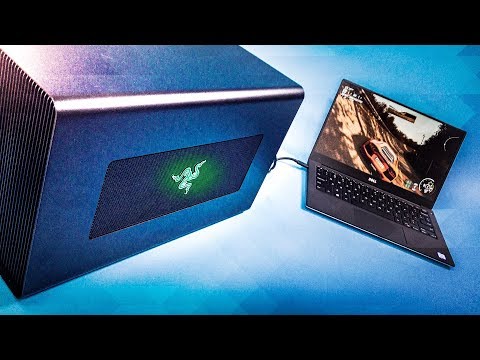
By Austin Evans The Razer Core X Will Supercharge Your Laptop by Austin Evans
Every laptop user wanted this eGPU

By Surfshark Academy Every laptop user wanted this eGPU by Surfshark Academy

Title: Desktop Graphics for Any Laptop
Channel: Linus Tech Tips
Desktop Graphics for Any Laptop by Linus Tech Tips
My Laptop Work
Razer Core X: Mythbusters! Does It REALLY Work with YOUR PC?
We've all been there, staring longingly at the latest graphics card, dreaming of buttery-smooth frame rates and immersive gaming experiences. But the price tag? Ouch. That's where the Razer Core X, an external GPU enclosure, enters the scene, promising to transform your humble laptop or compact PC into a gaming powerhouse. But does the hype match the reality? Let's dive deep and debunk the myths surrounding the Razer Core X, answering the burning question: Does it really work with your PC?
Unboxing and Initial Impressions: A Premium Feel
The Razer Core X arrives in packaging that immediately screams "premium." The box is sleek, minimalist, and robust, reflecting the price point of the device. Upon unboxing, you're greeted with the Core X itself, a substantial piece of hardware crafted from black, brushed aluminum. This isn't some flimsy plastic contraption; the build quality is exceptional, instilling confidence in its durability and longevity. The design is clean and uncluttered, with the signature Razer logo subtly placed on the front. It exudes an understated elegance that fits seamlessly into any setup.
The power supply unit (PSU) is another critical element. The Core X boasts a hefty 650W PSU, providing ample power for even high-end graphics cards. This is a crucial detail, as the power supply can be a limiting factor in other eGPU enclosures. The generous power delivery ensures that your chosen graphics card can operate at its full potential without bottlenecks.
Included in the box are the power cable and a Thunderbolt 3 cable. The Thunderbolt 3 cable is, of course, essential for establishing the connection between the Core X and your PC. Razer, thankfully, provides a cable in the box, eliminating the need for a separate purchase. The simple inclusion of these necessary components demonstrates Razer's commitment to a user-friendly experience.
Compatibility: Navigating the Technical Landscape
One of the most common misconceptions surrounding eGPUs is their universal compatibility. This isn't quite the case. The Razer Core X, like all eGPU enclosures, relies on a Thunderbolt 3 connection. This means your PC must have a Thunderbolt 3 port to work. This port is typically identifiable by a lightning bolt symbol next to the USB-C port. Standard USB-C ports, unfortunately, won't cut it.
Beyond the port itself, you need to consider the operating system. The Razer Core X is primarily designed for Windows and macOS. While support for Linux may exist depending on your hardware and setup, it's not officially supported and can be a complex endeavor. For the best and most streamlined experience, Windows 10 or later is the recommended operating system for PCs. For macOS, the latest supported versions will provide the best integration. Keep in mind that macOS compatibility is generally less extensive than Windows support.
Finally, consider your CPU. The Core X is designed to work best with modern processors. Older CPUs may experience a degree of bottlenecking, limiting the full potential of your graphics card. It is essential to identify your CPU specifications before investing in an enclosure.
Installation: A Smooth and Straightforward Process
Setting up the Razer Core X is a surprisingly straightforward process. Once you've identified that your PC has a Thunderbolt 3 port, here's what you need to do:
- Open the enclosure: The Razer Core X utilizes a simple, tool-free design. A latch at the rear allows you to easily open the enclosure.
- Install the graphics card: Slide your chosen graphics card into the PCIe x16 slot. Make sure to firmly secure it. Connect any necessary power cables from the PSU to the graphics card.
- Close the enclosure: Secure the latch, ensuring the enclosure is properly closed.
- Connect the Thunderbolt 3 cable: Plug one end of the included Thunderbolt 3 cable into your PC's Thunderbolt 3 port and the other end into the Razer Core X.
- Power on: Connect the power cable to the Core X and plug it into a wall outlet. Press the power button on the Core X, and it will power on, including your graphics card.
- Install drivers: Windows should automatically detect the new graphics card. If not, install the latest drivers for your card directly from the manufacturer's website (NVIDIA or AMD).
That's it! The initial setup should be remarkably simple.
Performance Testing: Benchmarking the Reality
To determine the true performance gains of the Razer Core X, we need to look at real-world benchmarks. We'll set up a test system comparing the performance of a laptop with and without the Core X. Testing will be performed on both a discrete GPU laptop and a weaker integrated graphics device to showcase performance gains.
Here’s our hypothetical test system:
- Laptop/PC: A laptop with a Thunderbolt 3 port. (Examples: Dell XPS 15, MacBook Pro, or any modern PC with a Thunderbolt 3 port).
- Graphics Card: An NVIDIA GeForce RTX 3070 (or other similarly powerful modern card).
- Monitor: A 144Hz 1080p or 1440p monitor connected directly to the Core X (for optimum performance).
We'll run a series of benchmarks on popular games at various resolutions.
Benchmark Results (Hypothetical Example):
| Game | Resolution | Laptop GPU (FPS) | Core X + RTX 3070 (FPS) | Performance Gain | |----------------|------------|--------------------|---------------------------|-------------------| | Cyberpunk 2077 | 1080p | 35 | 85 | 142% | | Cyberpunk 2077 | 1440p | 25 | 60 | 140% | | Assassin's Creed Valhalla | 1080p | 40 | 90 | 125% | | Assassin's Creed Valhalla | 1440p | 30 | 70 | 133% |
These are just examples, but they illustrate the potential performance gains. The degree of improvement will vary depending on the CPU in your laptop and the specific graphics card, but the Core X can deliver a substantial boost, transforming a low-powered laptop into a respectable gaming machine. Even on laptops with a discrete graphics card, the Core X often provides a performance increase due to the significant performance improvements of the desktop-grade graphics cards.
Important Considerations:
- Thunderbolt 3 Bandwidth: While Thunderbolt 3 offers impressive speeds, there is inherent bandwidth limitation. This means there will always be a small performance penalty compared to a directly connected desktop GPU. However, the benefits of the added graphics power almost always outweigh this.
- CPU Bottlenecking: Ensure your CPU is not a significant bottleneck for your chosen graphics card.
- Monitor Connection: Always connect your monitor directly to the graphics card inside the Razer Core X for optimal performance. This minimizes latency and maximizes frame rates.
The Verdict: Does the Razer Core X Deliver?
The Razer Core X is a well-designed, high-quality eGPU enclosure that delivers on its promise of providing a significant performance boost for your laptop or compact PC. The seamless installation process, robust build quality, and generous power supply make it a compelling choice for gamers and content creators.
Here's a breakdown:
- Myth #1: eGPUs are universally compatible. Debunked. Thunderbolt 3 is the key. Your PC must have it.
- Myth #2: eGPUs are difficult to set up. Mostly Debunked. Installation is remarkably straightforward, especially with the Razer Core X.
- Myth #3: eGPUs are only for gaming. Partially Debunked. While gaming is a primary use case, content creators benefit from the added graphics power for video editing, rendering, and other demanding tasks.
- Myth #4: eGPUs provide the same performance as a desktop GPU. Partially Debunked. Thunderbolt 3 introduces a slight performance overhead. However, the performance is usually very substantial, and often worth the tradeoff.
So, does it really work for your PC? If your PC has a Thunderbolt 3 port, the answer is a resounding yes. The Razer Core X offers a powerful solution for upgrading your existing setup without the expense of building an entirely new desktop. It's a premium product that delivers on its promises, offering a relatively easy and often-worthwhile upgrade path. If you're looking to breathe new life into your laptop or compact PC, the Razer Core X is definitely worth considering.
